

Renewables developers used to operate on a simple assumption: secure the capital, lock down consents, and manufacturing capacity will scale to meet demand. But with global energy transition investment reaching a record US$2.3 trillion in 2025 and renewable power deployment forecast to double over the next five years, the volume of projects under development is testing the limits of the supply chain.
For renewables developers and OEMs, a bottleneck in the component supply chain can add millions in financing costs while high-value assets sit idle. A late component can also mean losing an installation vessel slot entirely, since these vessels are booked years in advance and move to the next contract when a job isn't ready.
For procurement teams tasked with delivering renewables mega-projects, this has shifted the focus from cost management to complex risk management. Traditional component purchasing methods are struggling to account for the complexity of today’s renewables supply chain. Supplier reliability, manufacturing resilience and the ability to deliver against demanding project timelines are becoming critical procurement considerations.
The growing pressure on critical components
The scale of the challenge is already evident in the supply of step-up transformers, for example, which are needed to link wind and solar installations to the grid. The IEA reports that large power transformers can now take up to four years to secure, with average lead times almost doubling since 2021. As a result, tens of gigawatts of generation capacity are effectively stranded and up to half of planned developments are delayed across major markets, including the US and Europe. Missing these installation windows also breaches strict Power Purchase Agreement milestones, exposing developers to penalties and compounding financing costs.
What procurement teams need from suppliers
To reduce delivery risk, the renewables sector is adopting a higher standard of supply chain governance. Developers and OEMs are demanding proof of operational readiness, scrutinising how their suppliers manage schedules, mitigate risk, track carbon emissions and keep complex production lines moving.
This structural shift changes the dynamic between buyer and supplier. Saving a marginal percentage on a critical component is a false economy if the supplier cannot guarantee on-time delivery or provide shipment-ready emissions data. In this environment, resilience can’t be achieved through punitive contracting alone; it requires early, transparent collaboration where suppliers and procurement teams treat risk management as a shared operational discipline.
For component manufacturers, meeting that standard requires highly disciplined programme management, built-in manufacturing redundancies and clear supply chain visibility. Cooper Turner Beck, a global manufacturer of safety-critical fastening systems, demonstrates how these principles can be applied to reduce risk to developer timelines.
Applying aerospace discipline to renewables
Mark Gorman, CTB’s Senior Vice President of Renewable Energy and Infrastructure, brings decades of operational and manufacturing expertise from the civil aerospace industry.
That experience is particularly relevant to a challenge shared by both sectors: scaling production while maintaining rigorous control over quality and risk.
"In aerospace, a missed tolerance doesn't get discovered on the runway. It gets caught on the shop floor, because the cost of finding it later is a grounded fleet," Gorman says. "I'm applying the same discipline: catch the failure before it leaves the factory, not when it's seventy kilometres offshore."
Investing in operational resilience
Backed by Waterland Private Equity, Cooper Turner Beck has accelerated a programme of upgrades across its global footprint spanning 17 sites in 10 countries. From upgrading legacy European facilities with high-precision automated machining in Ennepetal to consolidating workshop layouts in Armentières, CapEx has been systematically deployed to remove production bottlenecks.
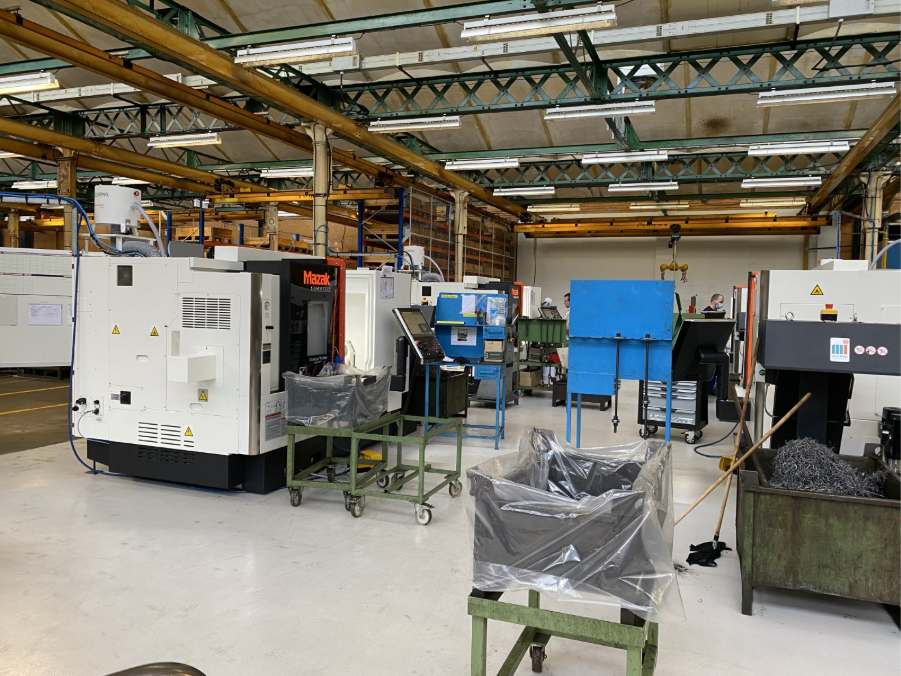
Alongside investment in physical machinery, CTB has standardised its approach to leadership development. Every site manager trains on the same Institute of Leadership-approved 26 Steps to Management curriculum, supporting consistent accountability across its facilities.
Compliance is also integrated into CTB’s operational processes. Its ESG processes support the provision of carbon and EU Carbon Border Adjustment Mechanism (CBAM) data alongside shipment documentation, helping customers meet their reporting requirements.
This investment in operational capability has already delivered measurable results. CTB has secured Deutsches Institut für Bautechnik (DIBt) certification for its M36 to M72 large-diameter fasteners in just nine months, compared with a process that typically takes three years. Pre-audited material traceability and engineering readiness helped accelerate the certification process.
Assessing supplier capability
Programme governance, site modernisation and compliance infrastructure can make supply chain risk more visible and manageable. For procurement leaders managing compressed construction timelines and strict regulatory regimes, the challenge is verifying whether a supplier’s claims are backed by physical capability.
Before signing off on a major component contract, procurement teams should ask:
- Can they link certified emissions data and material traceability straight to the physical batch on delivery?
- What back-up capacity, manufacturing redundancies and inventory buffers protect our delivery schedule if a facility hits a bottleneck?
- Does their leadership treat quality and traceability as frontline engineering mandates, or back-office compliance paperwork?
Suppliers that pass this test can help reduce delivery risk and keep major projects on schedule.
To discuss how CTB can support your renewable energy projects with safety-critical fastening solutions, get in touch with our team.


